Yes, technically you can over-insulate a house, but it is rare and usually not dangerous by itself. The real issue is diminishing returns: each additional inch of insulation saves less energy than the one before it. The one genuine risk is blocking soffit or attic vents with insulation, which traps moisture and can lead to mold. DOE recommends R-38 to R-60 for Houston attics (Climate Zone 2); R-60 is a practical ceiling, not a hard limit.
Can You Over-Insulate a House? (Houston Guide)
By USA Insulation Houston · September 28, 2026 · 7 min read
Fact-Checked & Reviewed
Building science & R-value specs verified against IECC Climate Zone 2A standards
Why "Too Much Insulation" Rarely Happens in Houston
Short answer: almost never. Most Houston homes we inspect are under-insulated, not over-insulated. Homes built before 2000 often sit at R-19 to R-30, well below the R-38 minimum DOE recommends for this climate. Getting to "too much" would mean adding well past R-60 — more than double what most existing attics have today.
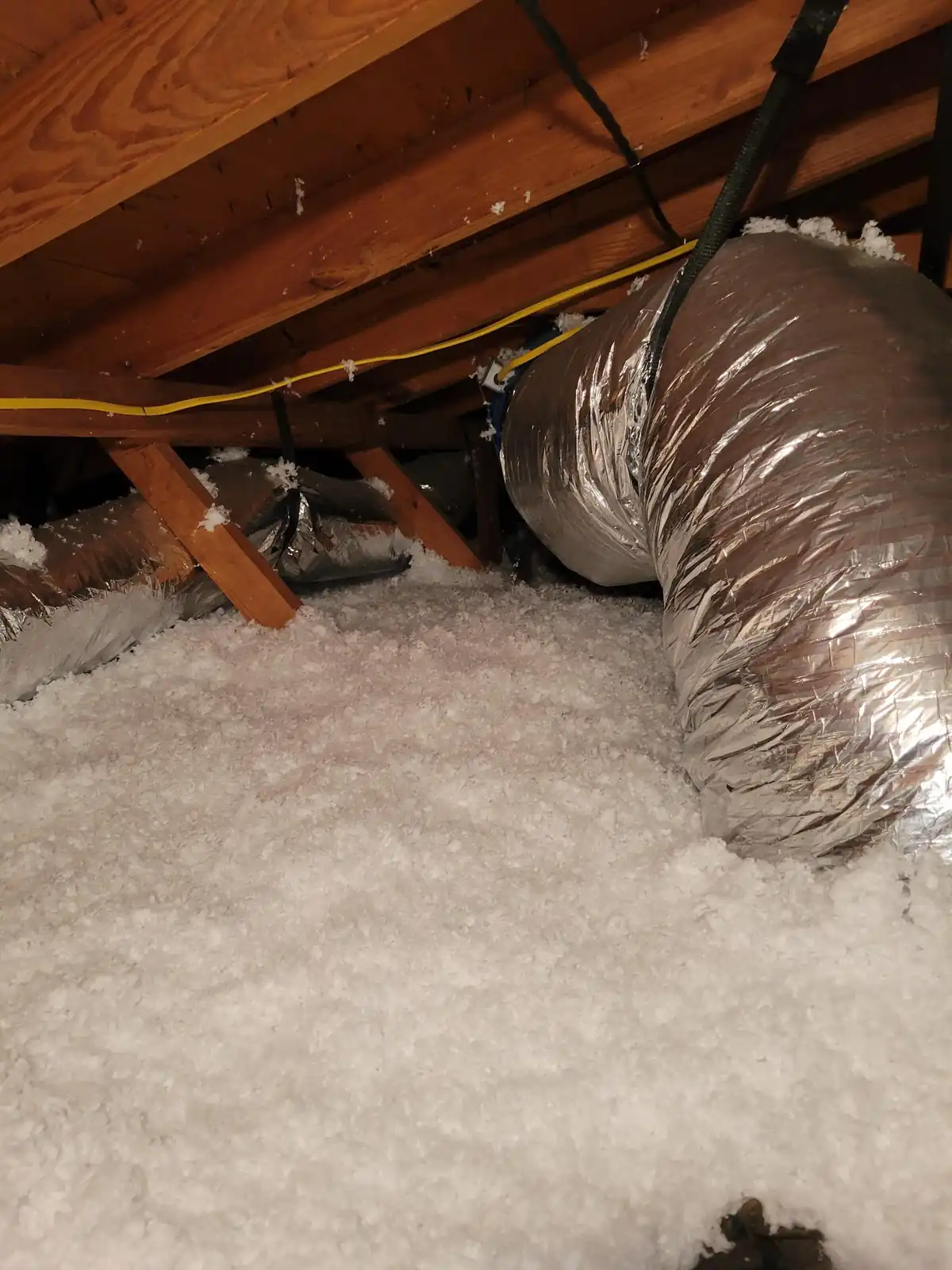
Here is a quick way to see which side of that line your own house is on: stand at your attic access and look at the floor. If you can clearly see the tops of the ceiling joists with insulation only filling the gaps between them, you are under-insulated, not over. Insulation that is deep enough to bury the joists completely and sits level across the whole attic floor is in the R-38-plus range most Houston homes actually need. Going past R-60 is uncommon enough in residential attics that we do not recommend or install it without a specific reason — a home office over the garage, a room with unusual heat loss, something the attic itself is telling us, not a default upsell.
The Real Reason More Isn't Always Better: Diminishing Returns
Insulation performance does not scale in a straight line, and this is the part most homeowners have not been told: it works the same way as adding blankets on a cold night. The first blanket makes the biggest difference. The second still helps, noticeably. By the fourth or fifth, you are barely warmer than you were with three, you are just heavier. Attic insulation behaves the same way mathematically. Going from R-19 to R-38 cuts heat flow by a large amount, because that first chunk of material is doing the most work. Going from R-49 to R-60 saves far less, because most of the available heat flow has already been blocked by the time you get there.
Put in real terms: a typical Houston attic top-off runs $0.95 to $1.55 per square foot for blown-in fiberglass. The inches that take you from R-19 to R-38 are worth every bit of that cost in summer savings. The inches that take you from R-49 to R-60 cost the same per square foot but return a much smaller slice of your electric bill, which is exactly why this is a cost-effectiveness ceiling, not a safety one. We do not push every homeowner toward the maximum R-value for the same reason a good mechanic does not upsell parts your car does not need: the right target depends on your home and budget, not just how much insulation can physically fit in the attic.
Get a Free Insulation Inspection
Most Houston jobs scheduled within the week.
Or call: 409-316-9957
The One Real Risk: Blocking Ventilation, Not the Insulation Itself
Can insulation actually cause mold? Only indirectly, and only if it is installed carelessly — the insulation material itself is not the problem, blocked airflow is. If blown-in material covers soffit vents or the attic's intake path, humid Gulf Coast air has nowhere to escape, and trapped moisture is what leads to mold and wood rot, not the insulation depth on its own.
What this actually looks like from a careless install: insulation blown in without baffles (the plastic or cardboard channels that hold a clear air gap open at the eaves) drifts and settles over the soffit vents within a year or two, sealing off the attic's only fresh-air intake. From the inside, the warning signs are the same ones covered in our guide to signs your home needs insulation: dark staining on the rafters, a musty smell at the attic hatch, visible mold on the underside of the roof deck. That is why baffles at the eaves and a clear intake path matter as much as hitting a target R-value — a correctly air-sealed and vented attic can carry R-60 with zero moisture risk, while a sloppy top-off at R-38 can still trap moisture if it buries the vents. Air sealing done correctly manages moisture paths deliberately instead of accidentally blocking them.
What Houston's R-60 Ceiling Actually Means
Should you go all the way to R-60, or stop at R-38? It depends on what you are optimizing for, and both are legitimate answers. DOE Climate Zone 2 (hot-humid, which includes Greater Houston) recommends R-38 to R-60 for attics. R-38 is the minimum worth doing — it is the point where you stop leaving easy savings on the table. R-49 to R-60 is for homeowners who want maximum summer performance, plan to stay in the home long term, or run a home office or converted room upstairs where every extra degree of comfort matters.
We do not recommend going past R-60 for a standard residential attic. There is no meaningful energy case for it, and it adds weight and cost without matching benefit — the same diminishing-returns math from above, just further along the curve. If you are not sure where your current attic actually sits, that is the first thing we check on a free walkthrough, before recommending a target. See our full R-value guide for the exact depth chart by target R-value.
Frequently Asked Questions
Can you have too much attic insulation?
Rarely, and it's usually not dangerous by itself. The real issue is diminishing returns past R-60, and the one genuine risk is insulation blocking soffit vents and trapping moisture.
What happens if you over-insulate an attic?
Past a certain point, extra insulation stops paying for itself in energy savings. If it's installed without keeping soffit vents clear, it can also trap humid air and lead to moisture problems.
Is R-60 too much insulation for a Houston attic?
No. R-60 is DOE's upper recommendation for Climate Zone 2, which includes Houston. It's a practical ceiling for maximum performance, not an unsafe amount.
Does USA Insulation ever recommend less than the maximum R-value?
Yes. Most Houston homes only need R-38 to R-49 to see real comfort and energy gains. We size the recommendation to your home and budget during the free inspection, not to a maximum figure.
Related Articles
Ready to Get Started? Free Estimate.
Contact us
4.8 / 221 Reviews
409-316-9957
Not sure what you need? That is normal. Tell us what you are seeing. We call back with plain answers, no jargon, no pressure to sign.