Coastal heat and humidity driving high cooling bills in Texas City attics
Attic Insulation Texas City, TX for Levee-Protected Homes
Texas City homeowners in ZIP codes 77590 and 77591 face Gulf Coast humidity year-round. USA Insulation Houston provides spray foam, blown-in attic, injection foam, and air sealing from Pasadena. Call 409-316-9957.
Contact us
Not sure what you need? That is normal. Tell us what you are seeing. We call back with plain answers, no jargon, no pressure to sign.
Regional Dispatch Radius · Galveston County Coastal Plain
Insulation for Texas City's Levee-Protected Neighborhoods
Searching for a trusted insulation contractor near me in Texas City? USA Insulation Houston dispatches certified, background-checked crews daily from our Pasadena regional office south along SH 146 and I-45 across Texas City's 66.3 square miles of land. As the third-largest city in Galveston County with over 51,890 residents per U.S. Census Bureau QuickFacts, Texas City homes range from early 1900s cottages to thousands of postwar brick ranches built between 1948 and 1970, alongside growing master-planned developments in Lago Mar. Surrounded by a 17-mile hurricane levee at an elevation of only 10 feet, local homes contend with extreme Gulf Coast humidity, tropical storm winds, and relentless attic heat. We provide same-week thermal walkthroughs, itemized quotes, injection wall foam, blown-in attic fiberglass, and closed-cell spray foam across ZIP codes 77590, 77591, and 77592 (also serving portions of 77510, 77539, and 77568). Direct phone: 409-316-9957.
Why Texas City Homes Lose Cooling Efficiency: 2 Core Culprits
What our field technicians discover during on-site attic and thermal wall inspections across Texas City.
Hollow Exterior Brick Wall Cavities
Following the historic 1947 port disaster, Texas City underwent its largest building boom from 1948 to 1970, doubling its population as petrochemical refinery workers built neighborhoods along Loop 197, 9th Avenue, and Palmer Highway. These sturdy brick ranches were constructed with completely uninsulated exterior wall cavities. In summer, radiant Gulf sun heats exterior brick past 105°F, radiating continuously through empty 2x4 stud cavities straight into interior drywall.
Severe Attic Vapor Pressure & Batt Compaction
At an elevation of just 10 feet surrounded by Galveston Bay and Moses Lake, Texas City rests inside a 17-mile hurricane protection levee. While the levee blocks tidal surge, heavy marine humidity settles across low-slope ranch roofs. Unsealed ceiling fixtures draw saturated air into attics, and original builder fiberglass in many homes has settled well below current DOE R-38 to R-60 targets, with attic temperatures reaching 145°F or higher.
Engineered Solutions · Texas City, TX
Insulation Solutions Engineered for Texas City Homes & Corridors
Custom thermal retrofits designed specifically for postwar brick ranches, early 1900s cottages, and industrial corridor moisture.
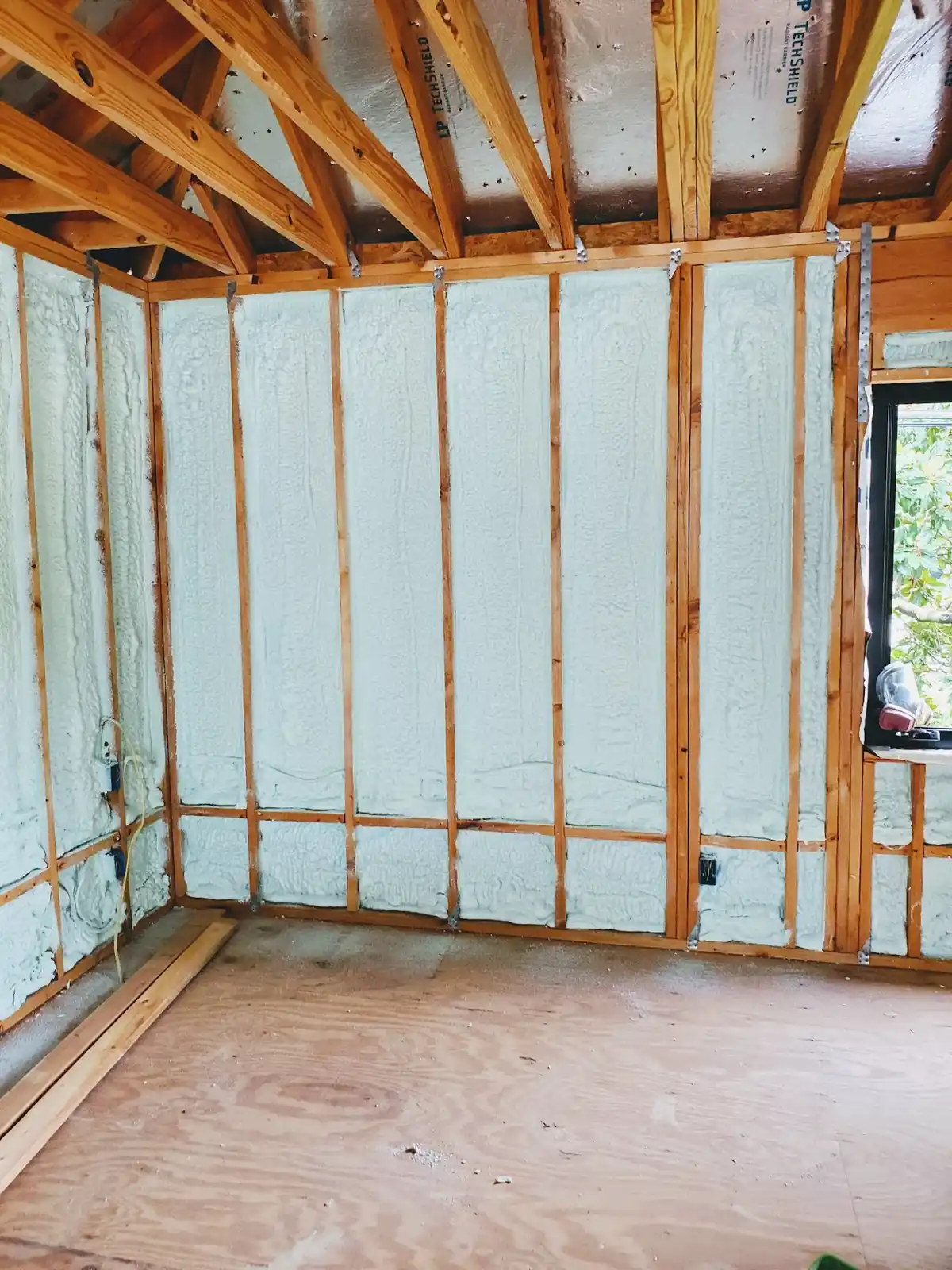
Injection Foam Wall Insulation Texas City, TX
The premier wall insulation upgrade for Texas City's extensive postwar housing inventory. Our certified crews drill discrete 5/8-inch access holes directly through exterior brick mortar joints or siding, inject proprietary USA Premium Foam® around wiring and plumbing to fill every void, and patch the holes with precision color-matched mortar. Blocks up to 80% of radiant solar heat through west- and south-facing walls while muffling heavy traffic and refinery noise from Loop 197 and SH 146.
Blown-In Attic Insulation Texas City, TX
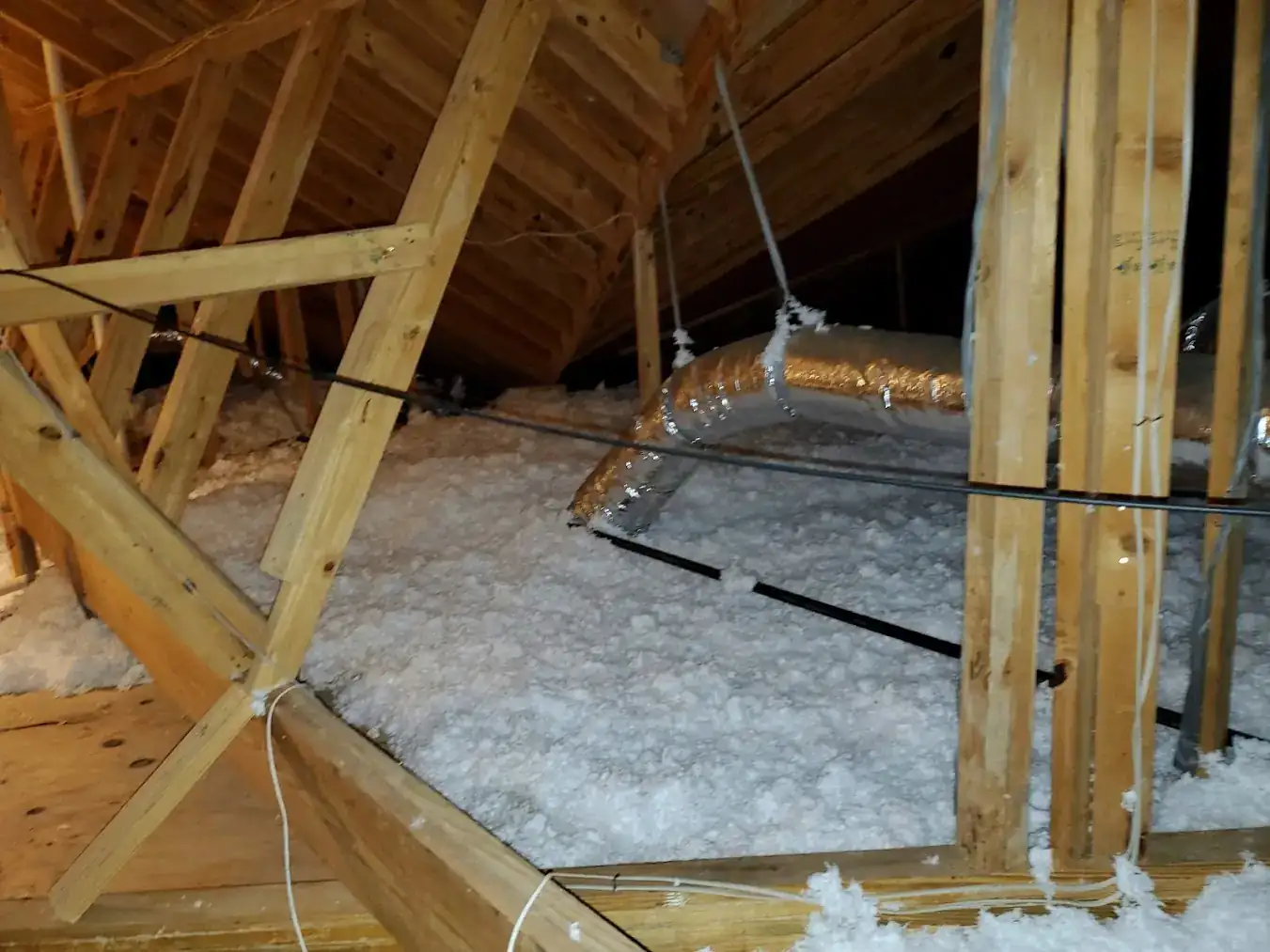
Most Texas City ranches built between 1950 and 1970 possess attics with compressed, settled fiberglass measuring only 3 to 5 inches (R-11 to R-15). On humid 95°F+ summer afternoons, radiant roof heat charges through ceilings into living spaces while ducts bake in unconditioned air. We install rigid soffit baffles to protect eave cross-ventilation, then blow virgin loose-fill fiberglass up to a dense, uniform R-49 (about 18 to 19 inches) or R-60 blanket (about 22 to 24 inches; approximate; varies by product and settling) that never settles, mildews, or decomposes.
Spray Foam Insulation Texas City, TX
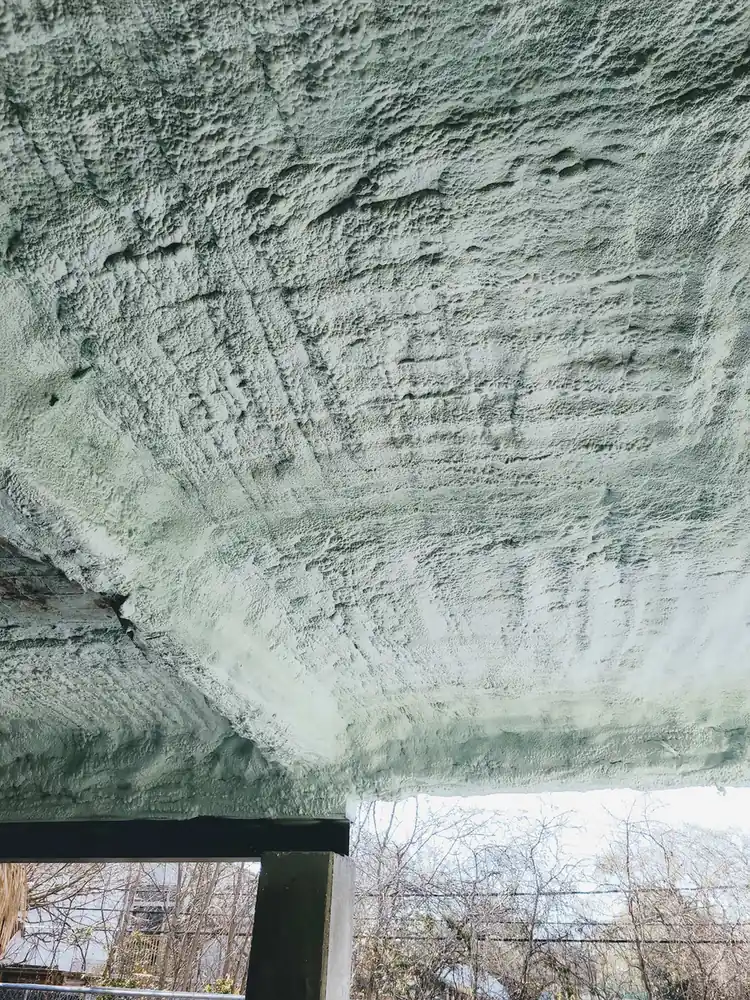
Applied along roof decking to create an unvented conditioned attic envelope. Forms an impermeable vapor barrier against intense Galveston Bay humidity, while gluing roof decking to rafters for superior hurricane wind resistance.
Commercial Insulation Texas City, TX
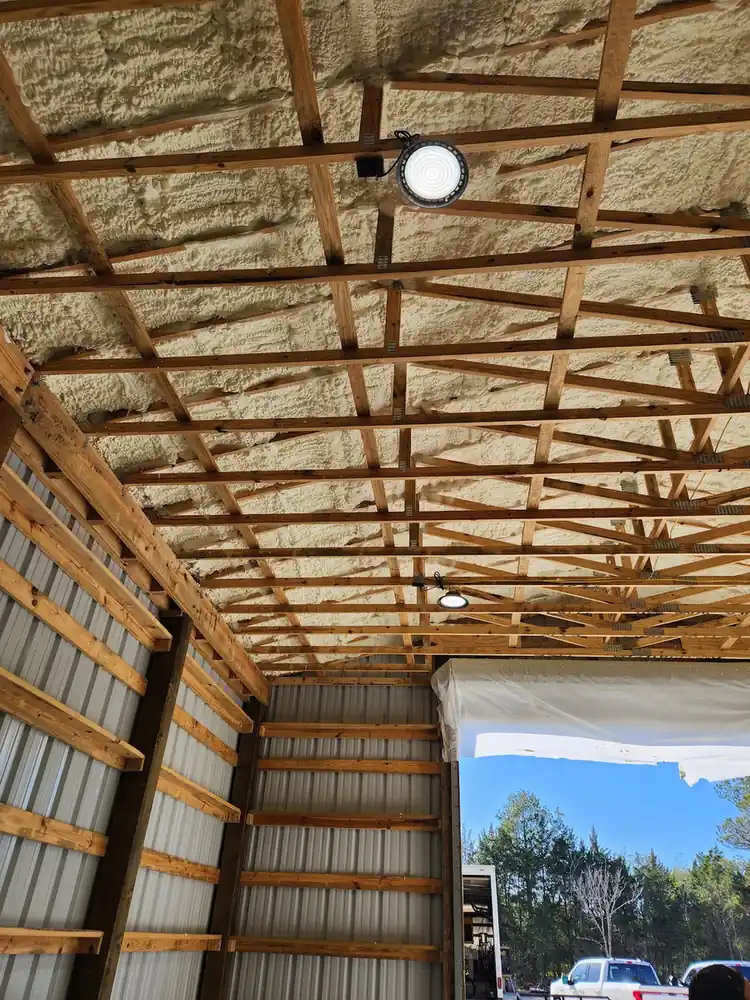
Custom thermal and condensation control for logistics warehouses, marine maintenance facilities, and industrial offices across the Port of Texas City, Texas City Terminal Railway, and Loop 197 petrochemical corridor.
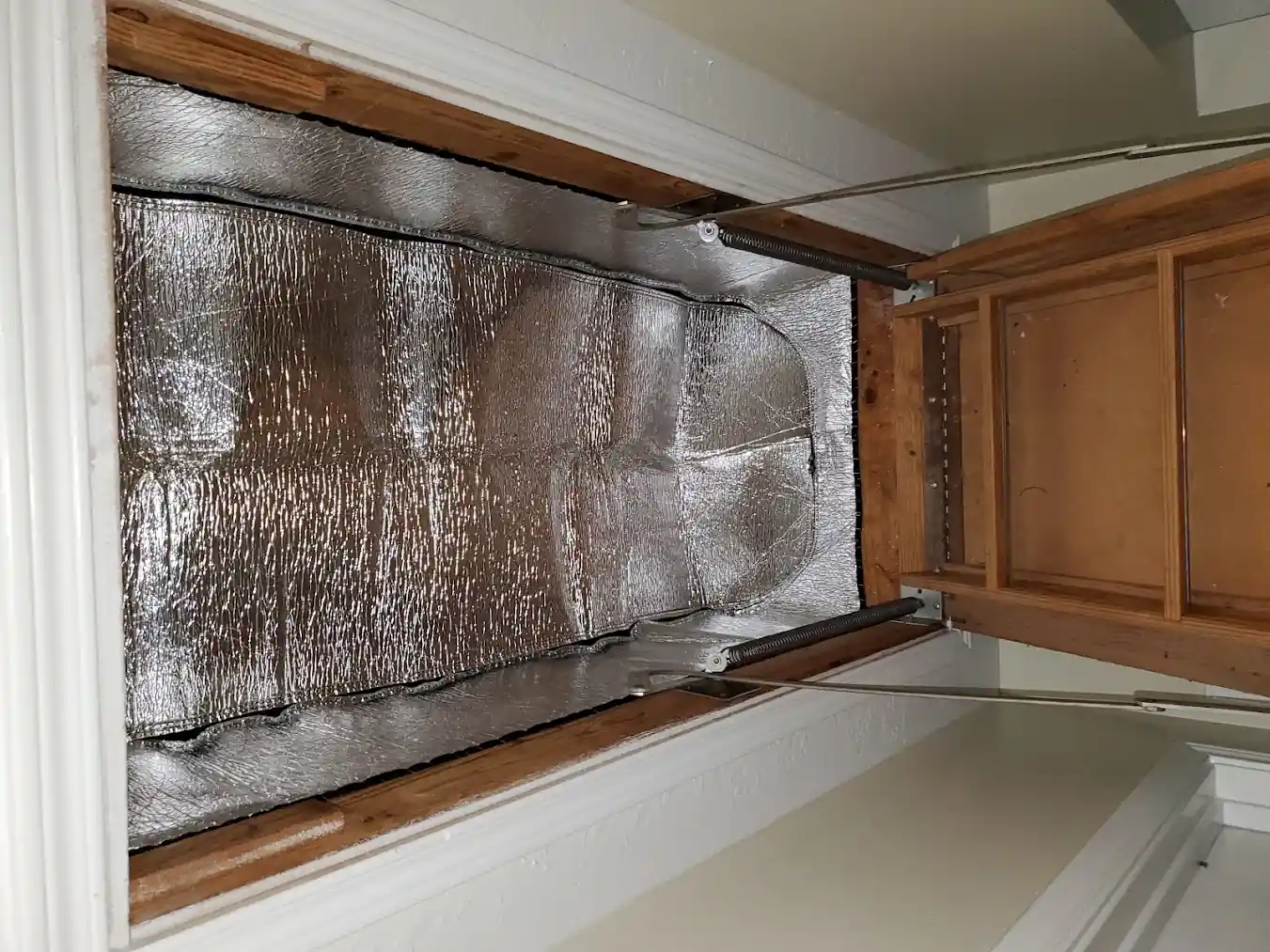
Air Sealing Texas City, TX
Unsealed plumbing penetrations, can lights, and HVAC duct boots act like open chimneys, pulling hot humid bay air into living rooms. We seal every ceiling penetration before blown-in insulation is installed.
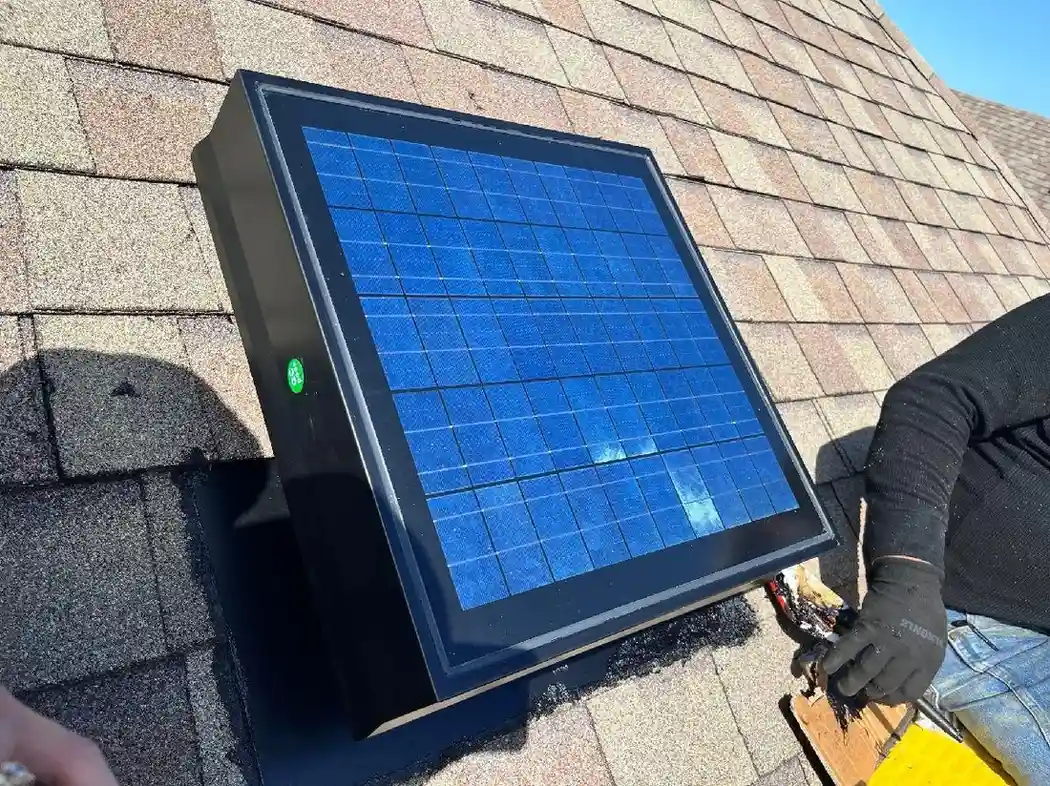
Attic Fan & Ventilation Texas City, TX
High-output solar roof fans continuously extract 145°F+ trapped heat from Texas City's low-slope ranch attics, protecting AC ductwork and reducing thermal fatigue on roofing shingles at zero electricity cost.
Texas City Pricing
Insulation Cost Per Square Foot in Texas City, TX
Texas City's levee-protected neighborhoods include a large stock of older homes rebuilt after the 1947 disaster, many with hollow wall cavities and attic insulation long since compressed below code. Final pricing depends on square footage, ceiling height, and wall cavity access — we provide an itemized quote during your free on-site walkthrough.
Pricing at a Glance
Air Sealing
Pairs well with attic work in Texas City's coastal humidity
Blown-In Attic Insulation
Common fix for Texas City's postwar rebuild-era attics
Spray Foam Insulation
Roofline sealing against coastal humidity
Injection Foam Wall Insulation
For uninsulated walls in Texas City's older homes
Recommended R-Value for a Texas City Attic
Texas City sits in DOE Climate Zone 2 (hot-humid coastal), which specifies R-38 to R-60 for attics. Because summer heat index levels regularly exceed 100°F and nights stay humid, establishing a deep thermal blanket is critical to prevent heat from radiating downward into living areas.
| R-38 (DOE minimum) | About 14 to 15 in. |
| R-49 (strong defense) | About 18 to 19 in. |
| R-60 (max efficiency) | About 22 to 24 in. |
Not sure what depth your attic currently has? Our free on-site walkthrough measures your exact insulation depth and gives you an itemized quote. Call 409-316-9957.
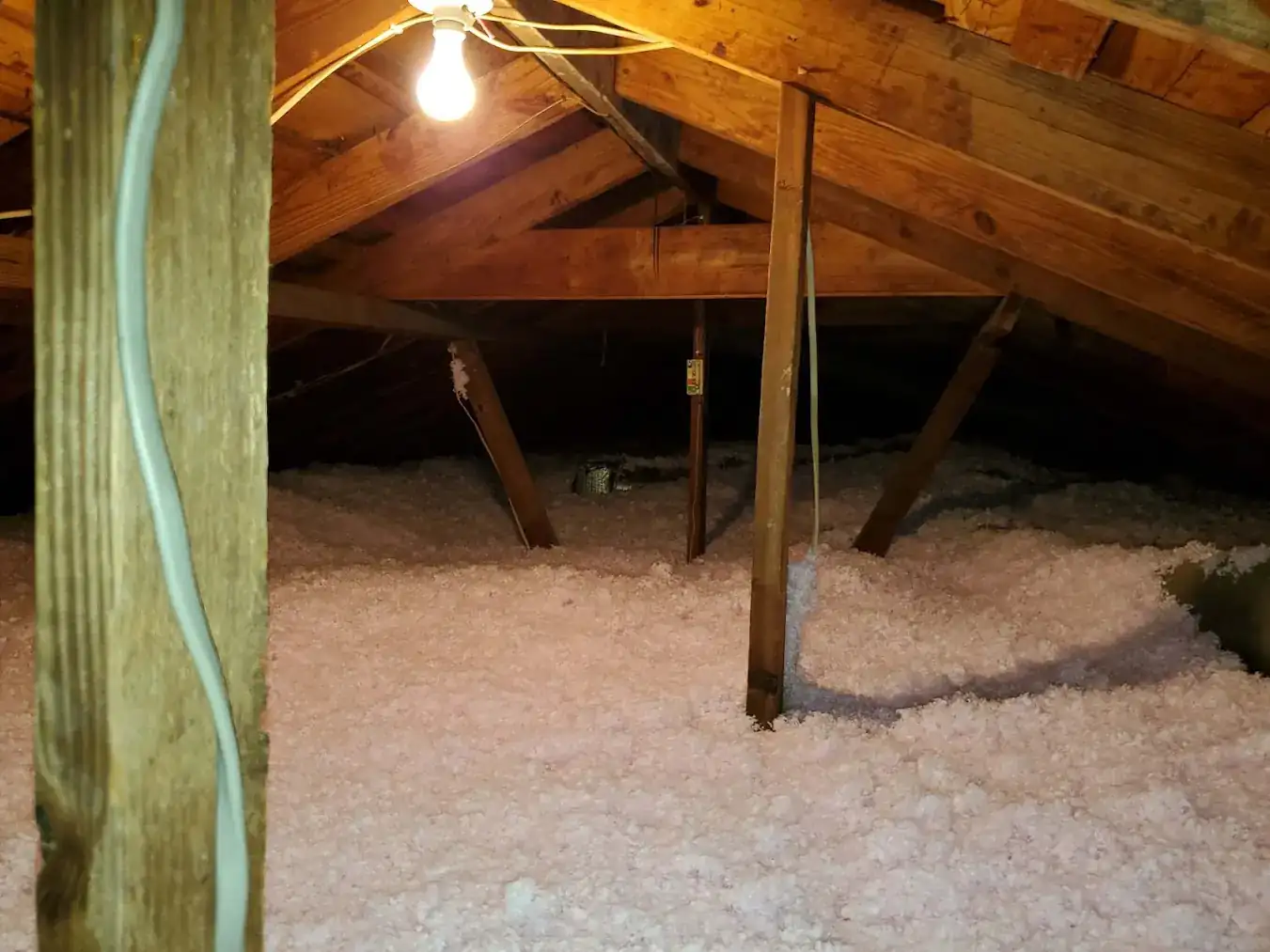
Dedicated Field Crews · Pasadena to Texas City Dispatch
Same Skilled Technicians on Every Texas City Job
Our fully equipped mobile insulation rigs travel directly down SH 146 and I-45 to serve homeowners across Texas City—from Bay Street and Palmer Highway to Lago Mar. Whether retrofitting exterior wall cavities on a 1950s ranch or blowing fresh virgin fiberglass into an uninsulated attic, our certified crews document every step with clear before-and-after photo records.
Local Building Science & Heritage
Texas City's Levee System, Post-1947 Rebuilding & Coastal Humidity Profile
Known as "The city that would not die", Texas City's low coastal elevation and mid-century rebuilding wave require specialized thermal protection.
The Summer Thermal Delta in Texas City Attics
91°F to 96°F
Texas City Summer Ambient High
140°F to 150°F
Unsealed, Under-Insulated Attic
Low-slope rooflines trap intense radiant solar heat over ceiling drywall, cooking HVAC ducts and driving AC runtimes to 14+ continuous hours daily in 1950s to 1970s brick homes.
Empty Exterior Wall Bays & Settled Original Ceiling Batts
After the devastating 1947 port explosion destroyed residential blocks near the harbor, Texas City rebuilt rapidly between 1948 and 1970, with population jumping from under 6,000 to over 38,900. Thousands of single-story brick ranches were constructed with zero exterior wall cavity insulation and thin attic fiberglass. Today, over 21,490 housing units exist in Texas City (U.S. Census Bureau), many with original exterior walls that conduct radiant heat straight into bedrooms. A handful of 1890s Victorians, such as the Davison Home, also require non-invasive retrofits that protect architectural integrity.
Primary Thermal Retrofit
USA Premium Injection Foam for exterior brick veneer walls + Blown-In Virgin Fiberglass upgraded to R-49 or R-60.
Marine Humidity, Low Elevation & Storm Resilience
Positioned along the southwest shore of Galveston Bay at an elevation of only 10 feet, Texas City's 17-mile hurricane protection levee system was authorized in 1958 and completed in 1987. While the levee successfully defended against Hurricane Ike's surge in 2008 (which overtopped the 5.2-mile Texas City Dike), the city remains in a high-moisture coastal basin. High ambient vapor pressure forces humidity into vented attics, degrading aged insulation and demanding whole-envelope air sealing.
Moisture Defense Protocol
Closed-cell spray foam for storm-resilient roof decks + Search & Seal air sealing to stop bay humidity from drafting through ceiling planes.
What Our Technicians Check During a Texas City Attic Walkthrough
Every homeowner receives high-resolution photos of all attic and wall findings accompanied by a transparent, itemized quote before any work begins.
Local Neighborhood Coverage
Communities & Housing Architectures We Insulate in Texas City
From historic turn-of-the-century cottages to postwar brick ranches and master-planned developments, we tailor insulation scopes to your home's exact construction era.
Early 1900s & Craftsman Cottages
1890s to 1910s Victorian residences and early craftsman cottages, including the historic Davison Home. These historic structures feature empty exterior stud bays that require non-invasive wall foam injection and attic air sealing with zero drywall tearout.
- Preservation-grade wall injection
- Whole-home envelope air sealing
Bay Street, Nessler Park & Loop 197
Extensive single-story brick ranches constructed during the postwar refinery expansion wave. These homes have hollow exterior wall cavities that bake in the afternoon sun, needing mortar-joint foam injection and R-49 blown-in attic fiberglass.
- Exterior brick mortar injection
- R-49 attic fiberglass restoration
Lago Mar & FM 1765 Corridor
Modern master-planned homes built since 2010 around the 12-acre crystal lagoon. Builders commonly installed code-minimum R-30 insulation that settles quickly, leaving upstairs rooms hot in August and requiring attic top-offs.
- Attic depth restoration to R-49
- Duct boot mastic air sealing
Port of Texas City & Marathon Corridors
Industrial facilities, warehouses, and commercial offices surrounding the Marathon Galveston Bay Refinery, Texas City Terminal Railway, and Dike Road. We apply closed-cell spray foam for thermal insulation and condensation control.
- Closed-cell spray foam application
- Condensation & vapor control
Ready to Cut Your Energy Bills in Texas City?
Free inspection. No obligation. Same-week scheduling.
Or call: 409-316-9957
Verified Field Case Study
Texas City Neighborhood Project: Bay Street & Nessler Park Corridor
How a 1964 brick ranch home overcame scorching summer wall heat and dropped cooling runtimes.
Home Architecture
1964 Single-Story Brick Ranch
2,150 sq ft · Nessler Park Area
Initial Diagnosis
Hollow Brick Walls & R-11 Attic
West wall 104°F · AC ran 15 hrs/day
Installed Retrofit
Injection Wall Foam + R-49 Blown-In
Mortar injection & Search & Seal
The Problem: The homeowners near Nessler Park experienced constant temperature swings between the living room and west-facing bedrooms. During July and August, exterior brick heated past 105°F, radiating continuously through uninsulated wall bays. Meanwhile, the attic contained only 4 inches of compressed 1960s fiberglass (R-11), forcing two AC units to run continuously.
Our Solution: Our crews completed a complete whole-home thermal upgrade in two stages. First, we injected proprietary USA Premium Foam® through discrete 5/8-inch holes in exterior brick mortar joints, completely filling the uninsulated stud bays with zero interior drywall disturbance. Next, our attic team performed Search & Seal® air sealing on all ceiling bypasses and blew in virgin loose-fill fiberglass to establish a uniform R-49 blanket (about 18 to 19 inches; approximate).
The Result: Interior wall temperatures on the west elevation dropped from 104°F to 76°F immediately. The homeowners reported a 34% reduction in summer electric bills, and the indoor temperature stayed at a steady 72°F all afternoon with normal AC cycling.
Texas City, TX Insulation FAQs
What insulation retrofit do Texas City's postwar brick ranches need most?
Most of Texas City's homes were built between 1948 and 1970 during the postwar refinery expansion. These single-story brick ranches have completely empty exterior wall cavities. In summer, radiant solar heat charges the exterior brick veneer up to 105°F and radiates straight into living areas. The proven combination is USA Premium Injection Foam® pumped through exterior mortar joints (zero drywall demolition), paired with an attic blown-in virgin fiberglass upgrade to R-49 or R-60.
How does Texas City's 10-foot elevation and levee system impact attic moisture?
Texas City sits at an average elevation of just 10 feet surrounded by Galveston Bay, Dollar Bay, and Moses Lake. While the 17-mile hurricane levee protects against tidal surge, heavy marine humidity concentrates in the basin. Humid bay air pushes into unsealed attics, and original fiberglass batts in many homes have settled well below current DOE R-38 to R-60 targets. We install precision Search & Seal® air barriers to block humidity at ceiling penetrations and recommend closed-cell spray foam for coastal roof decks.
Can you insulate exterior walls on Texas City's early 1900s homes without drywall damage?
Yes. For early 1900s cottages and craftsman bungalows, our installation is performed 100% from the outside. Technicians drill discreet 5/8-inch access holes through siding or brick mortar joints, inject slow-expanding USA Premium Foam® around original framing, and seal the access points cleanly. There is zero mess, zero interior dust, and no demolition of historical plaster or wood paneling.
How much does attic insulation cost in Texas City, TX?
For an average Texas City single-family ranch home (1,600 to 2,400 sq ft), blown-in attic virgin fiberglass upgrades typically range from $1,500 to $3,800 depending on attic square footage, access, and existing insulation depth. Closed-cell spray foam roofline conversions generally range from $3,500 to $7,500. We measure depth on-site during a free walkthrough and provide upfront, itemized quotes before any contract is signed. Call 409-316-9957.
Do you insulate commercial facilities and warehouses near the Port of Texas City?
Yes. We provide commercial-grade closed-cell spray foam and thermal barriers for metal warehouses, fabrication shops, and logistics offices across the Port of Texas City, Texas City Terminal Railway, and Loop 197 petrochemical corridor. Closed-cell spray foam eliminates condensation sweating on metal building panels and improves structural racking strength.
How Close We Are to Your Neighborhood in Texas City, TX
Our Greater Houston service area runs all the way down to the Gulf Coast, Texas City included. Here's the real drive from our crew.
Dickinson, TX
Further north on I-45, still inside our regular Galveston County route.
See our Dickinson page →Galveston, TX
South across the Galveston Causeway on I-45, right past Texas City.
See our Galveston page →Get a Free Estimate in Texas City, TX
Most jobs scheduled within the week.
Contact us
Not sure what you need? That is normal. Tell us what you are seeing. We call back with plain answers, no jargon, no pressure to sign.