Injection foam is for existing finished walls: small exterior holes, no drywall removal. Spray foam is for open cavities: attics, rim joists, crawl spaces, and new construction. Most pre-1980 Houston homes have empty wall cavities and need injection foam; most attic upgrades use spray foam or blown-in. USA Insulation of SE Houston installs both. Injection foam services → | Call 409-316-9957.
Injection Foam vs Spray Foam. Houston TX Guide
By USA Insulation of SE Houston · May 5, 2026 · 11 min read
Fact-Checked & Reviewed
Building science & R-value specs verified against IECC Climate Zone 2A standards
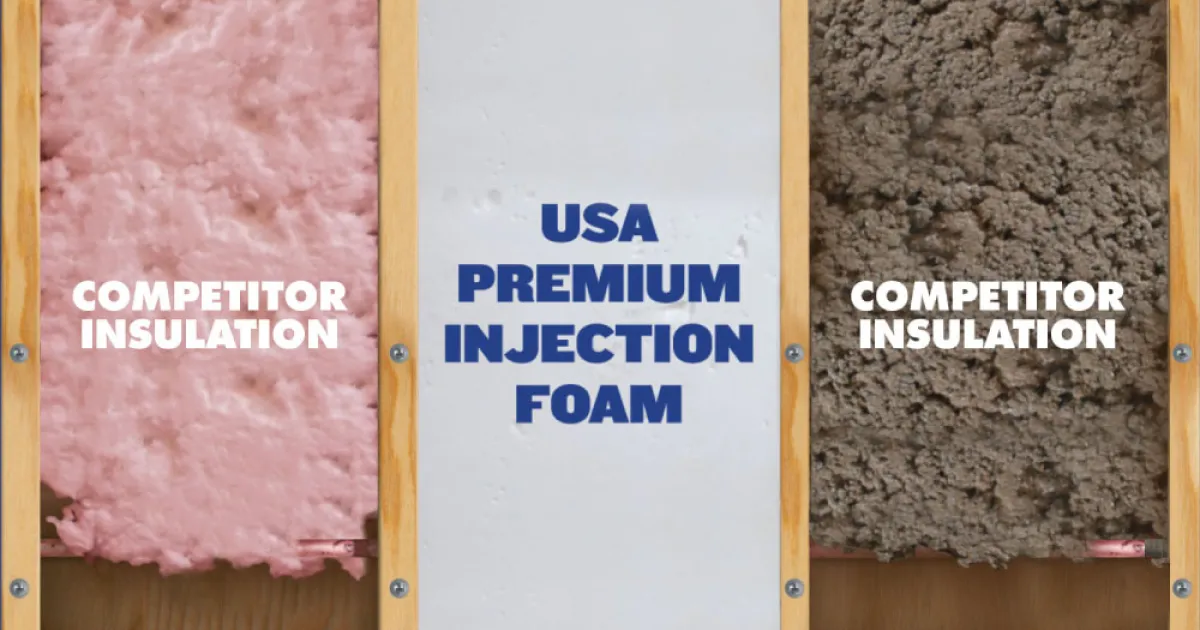
The Key Difference: Open vs Enclosed Cavities
The product choice starts with one question: can a technician reach the cavity from inside during install? If drywall is already up and you are not remodeling, the answer is usually no, and that is where injection foam earns its place. If the attic is open or framing is exposed, spray foam or blown-in is the practical path.
Injection Foam
Walls are already closed (drywall up). Foam is pumped through drilled access points on brick, siding, or fiber cement. Perfect for 1960s–1990s Houston homes in Harris County and Fort Bend County subdivisions that never had wall insulation.
Typical symptoms: west rooms that never cool, exterior walls hot to the touch in August, high bills despite a decent-looking attic.
Spray Foam
The cavity is open during install: attics, new builds, rim joists, and commercial roof lines. Foam is sprayed directly onto wood or metal and expands in place.
Typical symptoms: bare rafters, daylight at the rim joist, bonus rooms over garages, and metal buildings where batts will not stay put.
Injection foam does not replace attic spray foam, and spray foam in walls usually requires tearing out drywall unless you are in new construction. That is why Houston retrofit jobs often quote two scopes: walls and attic.
Decision Flowchart: Which Foam Does Your Houston Home Need?
Use this flowchart during a walkthrough or while reading your energy audit. It mirrors what our Pasadena crew checks on site.
Start: Which part of the home is uncomfortable?
Finished exterior walls — hot rooms, no demo wanted?
Yes → Injection foam from outside
No → Check attic / open cavities
Attic open with leaks at cans, hatch, or rim joist?
Yes → Spray foam or seal + blown-in
Walls only hollow → Injection foam
Book free walkthrough — quote each scope separately
Still unsure? Schedule a free inspection and we will map stud bays and attic conditions on camera if you want to see it.
Injection Foam vs Spray Foam Comparison Table
Side-by-side look at the two products we install most often on Greater Houston retrofits.
| Factor | Injection foam | Spray foam |
|---|---|---|
| Cavity type | Closed, finished walls | Open attics, rim joists, new build |
| Interior demolition | None | Not needed in attics; walls need open bays |
| Air sealing | Adds resistance in stud bays | Seals and insulates in one pass |
| Houston humidity | Helps hot exterior walls | Closed-cell blocks attic moisture paths |
| Typical cost | $3,000–$8,000+ whole home | $1,900–$4,500+ attic scope |
| Install time | Often one day | Often one day for attics |
| Best Houston use | 1970s brick ranchers, hollow 2x4 walls | Leaky attics, bonus rooms, coastal rim joists |
Injection Foam Process (Exterior Access)
Injection foam is a wall-only retrofit. Crews never open kitchens or baths inside the house.
- 1Map stud bays from outlets, exterior patterns, and construction era.
- 2Drill access holes in brick, siding, or fiber cement at each bay.
- 3Pump USA Premium Injection Foam® until the cavity is full.
- 4Plug and blend exterior finishes; interior stays untouched.
Pasadena and Pearland brick ranchers are the classic fit: empty bays, intact drywall, and owners who do not want a gut remodel. See our injection foam service page for pricing ranges.
Get a Free Insulation Inspection
Most Houston jobs scheduled within the week.
Or call: 409-316-9957
Spray Foam Process (Open Cavities)
Spray foam installs where the crew can see the substrate: attic decks, rafters, rim joists, and commercial roof lines.
- 1Prep and mask living areas; plan hose paths and re-entry timing.
- 2Apply foam in passes to target thickness (open- or closed-cell).
- 3Cure per manufacturer specs before attic re-entry.
- 4Walkthrough on coverage, ventilation, and comfort expectations.
Galveston County and Clear Lake homes often need closed-cell at vulnerable edges. Inland Harris County attics may pair air sealing with blown-in instead of full foam when the ceiling plane is already tight.
Which Do Houston Homes Need?
Walk through established neighborhoods in Pasadena, Pearland, Baytown, or League City and you will find thousands of homes built before 1980 with empty wall cavities. Those homes need injection foam if west-facing rooms stay hot. The attic, often stuck at R-19 or less, usually needs blown-in or spray foam separately.
In master-planned communities across Katy, Cypress, and Fulshear, newer builds often have code-minimum wall batts but still leak at the attic hatch and can lights. There the fix is often Search & Seal plus attic depth, not wall injection.
Coastal Galveston County homes add another layer: rim joists and roof decks that see salt air and humidity. Closed-cell spray foam is common there; injection foam still applies when interior walls were never filled on older coastal homes inland.
Our free inspection identifies both opportunities and quotes them separately or as a package. You approve scope before any holes are drilled or foam is sprayed.
When Houston Homes Need Both Products
Whole-home comfort often requires two upgrades because heat enters from the attic and through hollow walls. A common phased plan:
- Phase 1: Air seal + blown-in attic to stop the biggest summer load.
- Phase 2: Injection foam on exterior walls when budget allows.
- Targeted foam: Spray foam on a bonus room over a garage while walls wait.
We rank priorities at the walkthrough so you are not paying for wall foam when the attic is the main fight, or vice versa.
Frequently Asked Questions
What is the difference between injection foam and spray foam?
Injection foam fills existing enclosed wall cavities without demolition. Spray foam is applied to open cavities like attics and rim joists during construction or renovation.
Can injection foam be used in Houston attics?
No. Attics are open spaces, spray foam or blown-in is used there. Injection foam is specifically for finished walls.
Does injection foam require removing drywall in Houston?
No. Access is from the exterior only. Holes are plugged and siding restored after installation.
Is injection foam available in SE Houston?
Yes. USA Insulation of SE Houston installs USA Premium Injection Foam® throughout Greater Houston. Call 409-316-9957.
Related Articles
Ready to Get Started? Free Estimate.
Contact us
4.8 / 221 Reviews
409-316-9957
Not sure what you need? That is normal. Tell us what you are seeing. We call back with plain answers, no jargon, no pressure to sign.