Guide

Why Is My Second Floor So Hot? A Houston Homeowner's Guide

USA Insulation USA Insulation
· August 1, 2026 · 12 min read
Fact-Checked & Reviewed Building science & R-value specs verified against IECC Climate Zone 2A standards

Quick Summary

This guide explains the key benefits of insulation and air sealing for Houston homes, detailing how they work together to stop heat transfer and block humidity. Proper installation helps stabilize indoor temperatures, reduce the strain on your AC system, and lower your monthly energy costs.

  • Main takeaway: Proper insulation paired with air sealing stops attic heat and humidity from ruining your home's thermal boundary.
  • Who this page is for: Houston homeowners seeking solutions for hot upstairs rooms, high energy bills, and overworked HVAC units.
  • Primary solution: Professional assessment and targeted installation of appropriate materials like spray foam, blown-in, or injection foam.

Last Updated:
August 2026

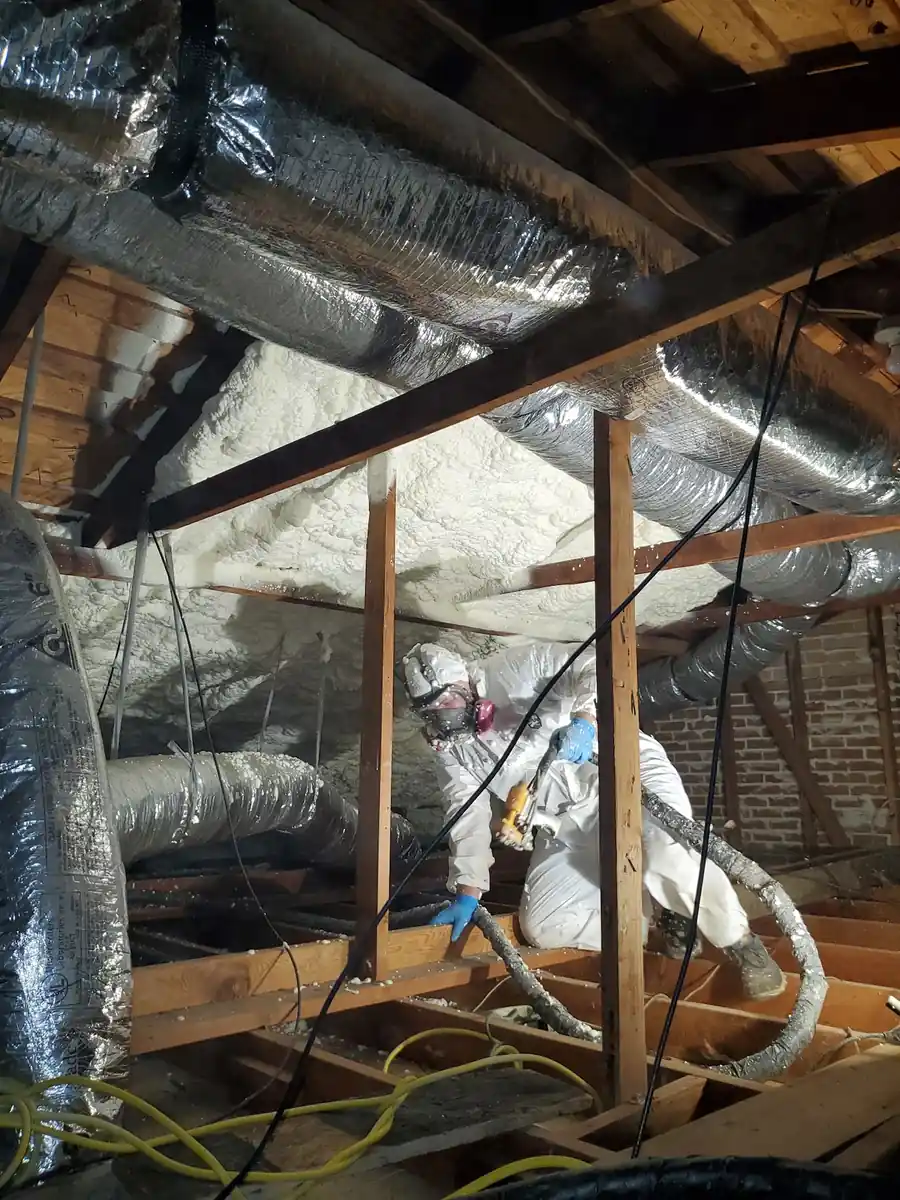
Insulation technician inspecting a hot attic to solve second floor heat issues in Houston, TX

Quick Facts

  • Physics: Heat rises, trapping hot air upstairs.
  • Radiant Heat: The roof absorbs solar radiation, turning the attic into an oven.
  • Common Culprit: Inadequate insulation and unsealed ductwork.

Why is my second floor so hot in Houston?

Addressing this concern is critical for maintaining comfort and lowering electric bills in Houston's demanding climate. By properly evaluating and upgrading your home's thermal envelope, you can block intense summer heat, prevent conditioned air from escaping, and significantly reduce the strain on your HVAC system, leading to lower monthly energy bills.

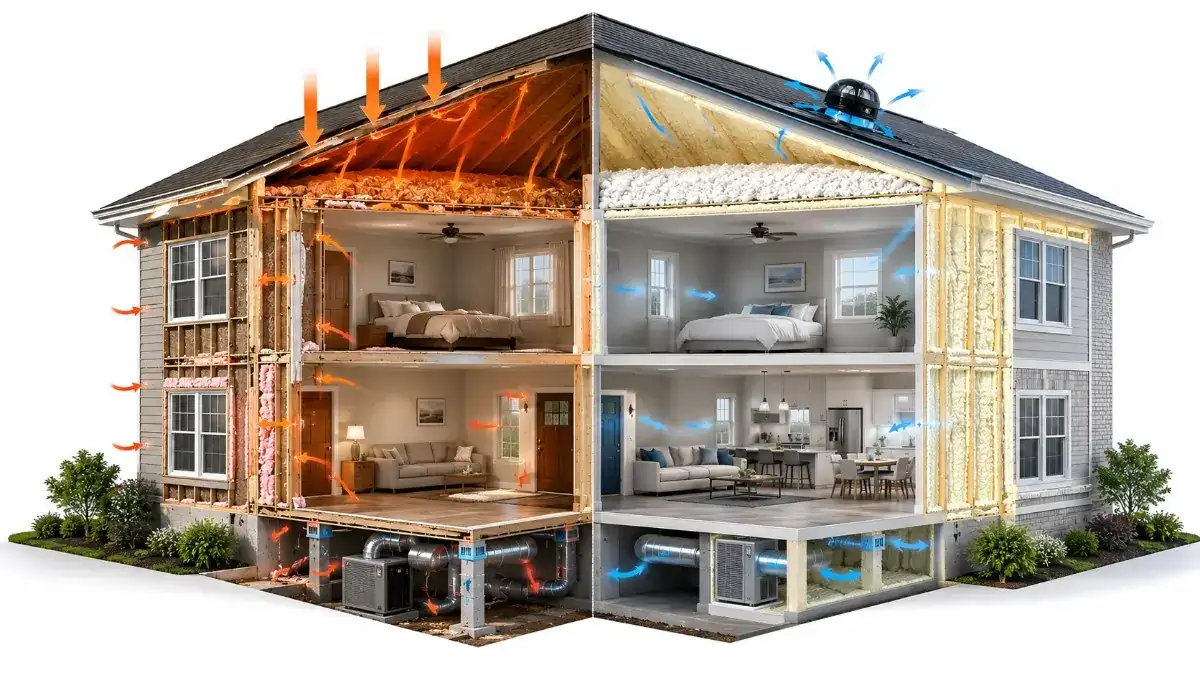
Your second floor is hot because radiant heat from your roof transfers down into your living space. Without adequate attic insulation and air sealing, your AC cannot overcome the 140°F heat pushing down from the attic.

  • Heat naturally rises (Stack Effect)
  • Radiant heat transfers from the roof deck
  • Missing or inadequate attic insulation
  • Unsealed air leaks allow humid air to enter
  • Degraded insulation loses its R-value over time
Est. Cost: Free Attic Inspection

It is one of the most frustrating experiences for a homeowner in Greater Houston. You walk into your home after a long day, and the downstairs feels crisp, cool, and perfectly air-conditioned. However, as soon as you walk up the stairs to go to bed, you hit a literal wall of heat. Despite the AC running constantly, your second floor feels like an absolute sauna.

If you are living in Pasadena, Pearland, League City, or anywhere in the Greater Houston area, you are not alone. A hot upstairs is the number one complaint we receive during the brutal Texas summer. The natural instinct is to turn the thermostat down even lower, but that only leaves you freezing downstairs while your upstairs remains uncomfortably hot—and your energy bills skyrocket.

In this complete guide, we break down the building science of why your upstairs stays hot, how the extreme Houston humidity plays a role, and most importantly, the practical steps you can take to cool down your second floor permanently. If you need immediate help, USA Insulation Houston provides free attic inspections to diagnose the exact cause of your heat transfer issues.
📝
Important Note: A phenomenon called the 'Stack Effect' pulls cool, conditioned air out of the lower levels while drawing hot, humid air down from the attic into your second floor.

The Science: Why Your Upstairs is Hotter

To permanently solve the problem of a hot second floor, it is important to understand the two primary forces of thermodynamics working against your home: the Stack Effect and Radiant Heat Transfer.

First, it is a basic law of physics that heat naturally rises. Warm air is less dense than cold air. Inside your home, the warm air naturally floats toward the highest point, which is your second floor. At the same time, the heavier, cooler air from your AC sinks to the first floor. This natural separation of temperatures is called thermal stratification.

However, the heat rising from your downstairs is actually the smaller part of the problem. The massive, overwhelming source of heat is coming from above your second floor—your attic.

During a typical Houston summer day, the sun beats down relentlessly on your roof. This solar radiation heats up your roof shingles, which transfer that heat to the wooden roof deck. The roof deck then radiates that heat downward, baking the air inside your attic. If your home lacks a sufficient thermal barrier, that 140°F radiant heat pushes straight through the drywall ceiling of your upstairs bedrooms. Your ceiling turns into a giant radiator, and your AC unit simply cannot produce enough cold air to counteract it.

The Houston Climate Factor (DOE Zone 2)

The Department of Energy classifies Greater Houston—including coastal communities like Clear Lake and Friendswood to rapidly growing two-story subdivisions across Katy and Cypress—as Climate Zone 2 (Hot-Humid). This unique climate drastically amplifies the problem of a hot upstairs for Texas homes.

In Climate Zone 2, we deal with intense, prolonged summer temperatures combined with oppressive humidity. Humidity is a measure of moisture in the air, and moist air holds significantly more thermal energy than dry air. When the humid, 95°F outside air enters a poorly ventilated attic, it becomes trapped and superheated. It is very common for Houston attics to reach temperatures exceeding 140°F to 150°F by mid-afternoon.

When that hot, humid air leaks down into your second floor through unsealed gaps in the ceiling, your HVAC system has to work twice as hard. It must first dehumidify the air before it can actually cool it. This dual workload exhausts your air conditioner, causing it to run constantly while still failing to cool your upstairs.

5 Reasons Your Upstairs Stays Hot

When our SE Houston team inspects homes with stubbornly hot second floors, we almost always find the root cause to be one (or a combination) of these five critical issues.

🎯
When to Choose: Choose a complete attic upgrade if the temperature differential between your first and second floor exceeds 4°F during peak afternoon heat.

1. Missing or Inadequate Attic Insulation

The most frequent culprit is simply a lack of insulation. Attic insulation acts as a thermal blanket that prevents the intense attic heat from transferring into your living space. The Department of Energy recommends an R-value of R-38 to R-60 for Houston homes. Unfortunately, many homes in Baytown and La Porte were built to minimum code, often with just R-19 or R-30. Without a thick, protective layer, the heat presses right through.

2. Unsealed Air Leaks (Attic Bypasses)

⚠️
Expert Warning: Recessed can lights are notorious for dumping hot attic air directly into second-floor bedrooms. If they are not ICAT (Insulation Contact Air Tight) rated, they must be boxed and sealed before any new insulation is applied over them.

Insulation slows down heat transfer, but it does not stop airflow. If there are holes or gaps in your ceiling—such as around recessed lighting, ceiling fans, HVAC registers, plumbing stacks, or the attic access door—140°F attic air will actively blow down into your bedrooms. Proper air sealing is critical. It involves applying expanding foam to permanently close these leaks before new insulation is installed.

Related ServiceAir SealingLearn more about this topic.

3. Old, Degraded Insulation

If your home is more than 10 to 15 years old, your existing insulation has likely degraded. Fiberglass settles and compresses over time, losing its loft and its ability to trap air, and the same is true of cellulose if an earlier installer used that instead. When insulation compresses, its R-value plummets, leaving your upstairs vulnerable to heat gain.

4. Leaky or Uninsulated Ductwork

📍
Houston Project Example: A client in Friendswood assumed they needed a second AC unit for their hot upstairs. Our inspection revealed a disconnected return duct pulling 120°F attic air straight into the system. Sealing the ductwork solved the problem for a fraction of the cost.

In many Houston homes, the HVAC ductwork runs directly through the scorching hot attic. If your ducts have leaks, cracks, or loose connections, you are literally pumping expensive, air-conditioned air directly into the attic instead of into your bedrooms. In addition, if the ducts themselves lack insulation, the cold air inside them will absorb heat from the attic, meaning the air is already warm by the time it reaches your upstairs vents.

🚫
Who Should Avoid: Avoid the temptation to just install a larger AC unit. A 5-ton unit pumping into a leaky, uninsulated space will short-cycle, failing to dehumidify the air.

5. Poor Attic Ventilation

A healthy attic must be able to "breathe." Cool outside air needs to enter through soffit vents at the eaves of your roof, sweep across the attic, and push the hot, humid air out through ridge vents at the top. If your soffit vents are blocked by old insulation, the hot air becomes trapped inside the attic, creating an oven effect directly above your second floor.

Stop Sweating Upstairs. Get a Free Attic Inspection.

Our local SE Houston team will find exactly where the heat is entering your second floor. Same-week scheduling.

Or call our local team: 409-316-9957

Decision Tree: Diagnose Your Hot Second Floor

Not sure what the exact problem is? Use this quick diagnostic guide to narrow down the issue before calling a professional.

  • Is only ONE upstairs room hot?
    Diagnosis: You likely have an unbalanced HVAC system, disconnected ductwork above that specific room, or inconsistent insulation coverage.
  • Is the ENTIRE upstairs hot, but the ceiling feels normal to the touch?
    Diagnosis: Your HVAC unit may be undersized for the home, or you have severe duct leakage causing all the cold air to escape before reaching the second floor vents.
  • Is the ENTIRE upstairs hot, AND the ceiling feels warm to the touch?
    Diagnosis: You have a severe lack of attic insulation. Radiant heat is successfully penetrating the drywall and turning your ceiling into a giant radiator.
  • Is the upstairs hot AND very humid/sticky?
    Diagnosis: You have massive air leaks. Humid attic air is being sucked down into your living space through unsealed fixtures, overwhelming your AC's dehumidification capacity.
⚔️
Decision Box: First, ensure your AC dampers are correctly balanced. If airflow is good but the room is still hot, the problem is your insulation envelope.

Step-by-Step Recommendations to Cool Your Upstairs

Fixing a hot second floor is a systematic process. If you want to achieve maximum energy savings and comfort, follow these step-by-step recommendations:

  1. Step 1: Perform a Thorough Attic Inspection. Do not guess. Have a professional measure the depth of your existing insulation, check for blockages in your soffit vents, and perform a thermal assessment of your ductwork.
  2. Step 2: Seal the Air Leaks. Before any new material is added, the attic floor must be completely air-sealed. Expanding foam should be applied around every wire penetration, plumbing stack, and recessed light to stop the flow of humid air.
  3. Step 3: Fix Duct Issues. Any disconnected or leaky ductwork must be re-sealed using mastic sealant and properly insulated to ensure the cold air actually makes it to your vents.
  4. Step 4: Install the Thermal Barrier. Finally, upgrade your insulation to meet the R-38 to R-60 standards for Houston. The type of insulation you choose here will determine the ultimate comfort level of your upstairs.

Pros & Cons

  • Pros (Fixing the Attic): Restores upstairs comfort without buying a larger AC unit.
  • Cons (Ignoring it): Overworks your compressor, leading to premature HVAC failure.

Comparison: Spray Foam vs. Blown-In for Hot Upstairs

When it comes to cooling a brutally hot second floor, homeowners typically choose between two main products: Blown-In Insulation and Spray Foam.

Feature Blown-In Insulation Spray Foam Insulation
Primary Benefit Cost-effective thermal blanket over the ceiling. Total air seal and thermal barrier; conditions the attic.
Air Sealing Requires separate manual air sealing step first. Built-in. Expands to seal all cracks and gaps automatically.
HVAC Impact Good. Lowers ceiling temps and reduces AC runtime. Excellent. Brings ductwork into conditioned space, maximizing AC efficiency.
Best For... Strict budgets and homes with existing good ventilation. Permanent solutions and homes battling extreme upstairs heat.

While blown-in fiberglass is a massive improvement over bare attics, spray foam insulation is the ultimate solution for a hot second floor in Houston. Because it is applied directly to the underside of the roof deck, it stops the radiant heat before it ever enters the attic space. It transforms a 140°F oven into a semi-conditioned space, making it vastly easier for your HVAC system to keep your upstairs cool.

Related ServiceSpray Foam InsulationLearn more about this topic.

Frequently Asked Questions

Why is my upstairs so hot in the summer?

Your upstairs is hot because heat naturally rises and radiant heat from your roof transfers down into your living space. Without adequate attic insulation and air sealing, your AC cannot overcome the 140°F heat pushing down from the attic.

Does adding insulation help cool a second floor?

Yes. Adding blown-in insulation or spray foam creates a thermal barrier that blocks radiant heat from entering your second floor, keeping it noticeably cooler and reducing the workload on your HVAC system.

What is the best insulation for a hot upstairs?

Spray foam insulation is the best option for a hot upstairs because it acts as both a thermal barrier and an air barrier, completely sealing off the conditioned living space from the extreme heat of a Houston attic.

Why is my AC running but the upstairs is still hot?

If your AC is running but the second floor remains hot, you are experiencing severe heat gain through a poorly insulated attic, or losing cooled air into the attic through duct leaks and air bypasses.

How can I tell if my attic insulation is bad?

If you look in your attic and can see the wooden floor joists above the insulation, or if your upstairs ceiling feels warm to the touch on a sunny day, your insulation is insufficient for Houston's Climate Zone 2.

USA Insulation Houston Team

USA Insulation Houston

Independently owned USA Insulation franchise (USA Insulation of SE Houston). Locally owned since 2023 and serving Greater Houston from Pasadena. We specialize in premium spray foam, injection foam, and blown-in attic insulation designed specifically for Texas Climate Zone 2.

Licensed & Insured 5-Star Rated

Related Articles